Seaweed on Miami Beach: the 2026 sargassum season, what it is like now and how to plan around it
Is there seaweed on Miami Beach right now? The 2026 sargassum numbers, the October outlook, how the beaches get cleaned and the health advice.
The short version
- Right now: Declining since July; USF expects smaller beachings into November 2026.
- The year: 2026 is the second-largest sargassum year on record, after 2025.
- Worst months: June and July; the county called July the worst.
- Cleanup: Tractors rake county beaches early, but not from dusk to sunrise in turtle season.
- Health: Rotting mats smell of hydrogen sulfide; skip them if you have asthma.
In late October 2026 Miami's sargassum is past its peak and still shrinking, so expect some seaweed on Atlantic beaches but nothing like June and July; go early, when the rakes have just been through.
Is there seaweed on Miami Beach right now?
Some, but much less than in summer. The University of South Florida's Optical Oceanography Lab, which tracks sargassum by satellite, said in its September 30, 2026 bulletin that the total amount in every region kept falling in September: the belt of seaweed from West Africa to the Gulf was half of August's, which was itself half of July's. Its outlook is that amounts keep decreasing until possibly November, and that beaching on the southeast coast of Florida will continue, "but not as severe as in the summer months."
The same bulletin still had every region except the eastern Atlantic above the 75th percentile of historical levels for September. In plain words: a calmer month than summer, but a heavier one than a typical year.
USF stresses that its bulletins are general outlooks, not a forecast for a particular beach. On the day, the best check is your own eyes, a recent photo from your hotel, or the lab's high-resolution coastal maps.
How the 2026 season went
| Bulletin | What USF reported |
|---|---|
| January 31 | Record-high January amounts in most regions; 2026 "very likely" another major sargassum year |
| June 30 | Gulf total reached 5 million metric tons, nearly double the 2025 record; severe beaching on Florida's southeast coast |
| July 31 | Amounts started to fall; the peak month was over; 2026 set to be the second-largest year, after 2025 |
| August 31 | Belt halved; beaching continued in August, including the southeast coast of Florida |
| September 30 | Halved again; decline expected until possibly November, with smaller beaching events |
The October 2026 bulletin had not been posted when we checked on October 26.
USF Optical Oceanography Lab, Sargassum outlook bulletins 2026, checked October 2026
Who cleans the beach, and when
Miami-Dade County's parks department cleans sargassum on 17 miles of county beaches, and its crews work South Beach. Speaking to The Guardian in August 2026, the county's chief of conservation, Chris Bumpus, said crews removed about 9,000 tons in July, more than in any single month before, and that "July is always the worst." A crew member checks South Beach around 7 am before a dozen tractors and beach-cleaning machines start. In July, Bumpus said, the beach looked clean for about an hour.
Crews can only act once the seaweed lands, and the county's state permit bars heavy equipment during turtle nesting hours, from 30 minutes before sunset until sunrise. That is why the sand is usually at its cleanest in the morning and builds up again through the day.
Smaller towns add their own passes. Bal Harbour said in July 2026 that the county rakes its whole beach daily, a contractor makes a second pass, and village crews clear the hotspot of about 800 feet nearest the jetty every day.
How to plan a beach day around it
| You land in late October or November | Expect some brown mats at the tide line; go in the morning, after the rakes |
| The Atlantic side looks bad | Try a bay-side beach that faces Biscayne Bay, such as Hobie Beach or Matheson Hammock, and check before you drive |
| You have asthma or a breathing condition | Avoid beaches with piles of rotting seaweed; the state health department says you are more sensitive to the gas it gives off |
| Small children | Keep them from playing in the mats; tiny animals living in them can cause rashes and blisters |
| You are booking a trip for June or July 2027 | Treat seaweed as likely; both 2025 and 2026 peaked in those months |
Health advice, from the state
- Rotting sargassum releases hydrogen sulfide, which the Florida Department of Health says can irritate the eyes, nose and throat
- People with asthma or other respiratory illnesses are more sensitive to hydrogen sulfide
- The seaweed itself is harmless to touch, but tiny sea creatures that live in it can cause skin rashes and blisters
- Never cook or eat it: the department warns it may contain heavy metals such as arsenic and cadmium
- Always supervise children at the beach, especially around the mats
Questions people ask
Is there seaweed in Miami right now?
Less than in summer. USF's September 30, 2026 bulletin said sargassum was declining in every region and expected beaching on Florida's southeast coast to continue into November 2026, but not as severely as in June and July.
What month is seaweed season in Miami?
In 2026 the amounts grew from January, peaked in June and July and fell from August. Miami-Dade's conservation chief called July the worst month for cleanup.
Is sargassum dangerous?
Not to touch, but the Florida Department of Health says rotting mats release hydrogen sulfide, which irritates the eyes, nose and throat and affects people with asthma more, and animals living in the mats can cause rashes.
Does Miami Beach clean up the seaweed?
Yes. Miami-Dade County's parks department cleans 17 miles of county beaches, with crews checking South Beach around 7 am. Its permit bans heavy equipment from 30 minutes before sunset until sunrise in turtle nesting season.
More guides
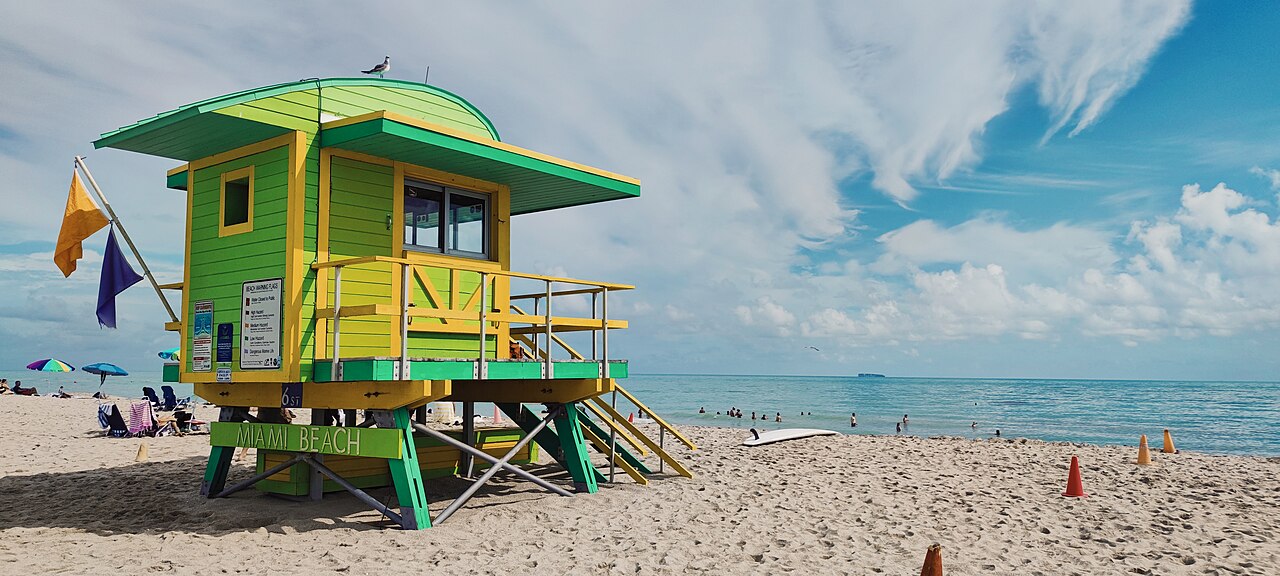 Miami beaches: which one to pick, and when to goBeaches · Outdoor · 10 min read
 Miami hurricane season: the dates, the real risk for a trip, and what to do if a storm comesWeather · Hurricanes · 4 min readThe best time to visit Miami: month by month, with the weather numbers and the 2026-27 event calendarPlanning · Weather · 4 min read
Season data from the USF Optical Oceanography Lab 2026 sargassum bulletins (January, June, July, August, September); cleanup figures from The Guardian via Mother Jones (August 2026) and Bal Harbour Village (July 2026); health advice from the Florida Department of Health in Monroe County; checked October 2026.